Rush Memorial A.M.E. Zion Church
82 School St, Cambridge, MA 02139
A Freedom Church in Cambridge—Rush Memorial A.M.E. Zion Church
It is the church of “Truth.” It is the church of “Moses.” It is the church of “The Lion of Anacostia.” It is the Freedom Church! It is the African Methodist Episcopal Zion Church and it is a faith and it is a movement. Rush Memorial A.M.E. Zion Church is a pillar of that faith and an exemplar of that national movement in Cambridge, Massachusetts. The eighteenth century was a revolutionary century in the church and the nation. Guided by the Holy Spirit, with their “hearts strangely warmed” by Methodism, Africans and their descendants carried forward that spirit of revolution in the cities of Philadelphia and New York, establishing two pillars of African Methodism. In 1787, the Free African Society began what became the African Methodist Episcopal Church (A.M.E.) in Philadelphia with its first church called Bethel. In 1796, free Africans in the John Street Church—James Varick, Abraham Thompson, June Scott, William Miller and several others—started an African Methodist movement that came to be called Zion in honor of its first church, Zion Chapel, which later became the Mother Church of Zion Methodism.
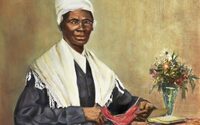
In the nineteenth century, the church moved to the forefront of the abolition movement. The new denomination became home to some of our most prominent abolitionist heroines and heroes, Harriet Tubman (“Moses”), Sojourner Truth (“Truth”), and Frederick Douglass, the “Lion” of Anacostia. The founders “believed that God had called them out of their bondage and chosen them to be His people and a channel for His redeeming love for all people.” Zion Methodists believe they are called “to bring good news to the poor, to proclaim release to the captive, recovery of sight to the blind, to let the oppressed go free and to proclaim the Year of the Lord’s favor.” The Spirit-inspired struggle for liberation and emancipation is woven into the A.M.E. Zion “DNA.”
Rush Memorial A.M.E. Zion Church is named for one of its most famous bishops, Bishop Christopher Rush (1777-1873). Born in Craven County, North Carolina, Bishop Rush was a proud “full blooded African.” He arrived in New York and was freed in 1798, two years after the founding of the church. Licensed in 1815 and ordained in 1822, Rev. Rush became a Bishop in 1828. By 1843, according to his own account, Bishop Rush was actively involved in organizing the order and the discipline of the church. As the second presiding Bishop after founder James Varick, Rush was responsible for organizing at least four northern conferences, including the one where Rush Memorial A.M.E. Zion is a part. Rush Memorial A.M.E. Zion was founded four years after this beloved Bishop passed away.
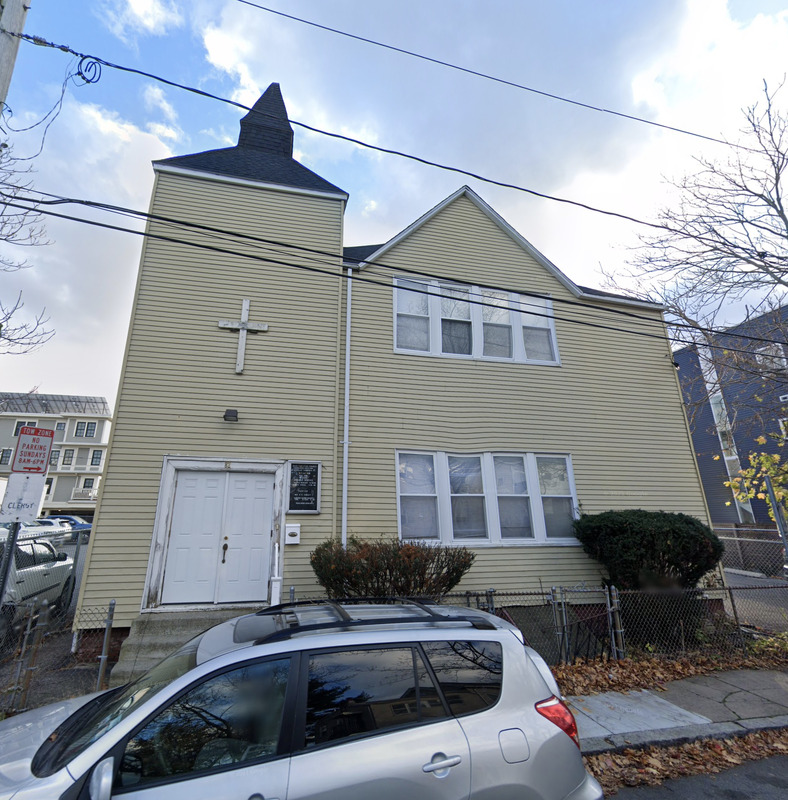
According to a church history published during its 1977 centennial, the Cambridge church began as a “Colored Society” and members worshipped together in “a room on Main Street.” A.M.E. Zion discipline required that such a “society” reach a membership of one hundred in order to become a church. The members raised $1,000.00 (one thousand dollars) and purchased the land at 82 School Street “from Mrs. Leonard of Washington, Street.” The Church was incorporated in 1888 and a two-story wooden edifice was built. When the cornerstone was laid, a special box served as a time capsule to be opened on the occasion of the church’s centennial. The box was given to the keeping of the Prince Hall Grand Lodge whose officers included the Grand Master, several other officers, and Rev. William Bowen. In addition to papers marking the event, women contributed money as symbols of the seeds being planted for the growth of the church.
Rush Memorial A.M.E. Zion Church is the second oldest African American congregation in Cambridge. Its spiritual influence inspired and nurtured a history of educational achievement and civic engagement. That inspiration is evident in the African Methodist Episcopal Zion Church’s affiliation with Livingstone College in Salisbury, North Carolina. Rush’s longest serving pastor, North Carolina native Rev. James Clement and his brother, Dr. Rufus Clement, former president of Atlanta University, highlight that connection. Families who migrated from the South to Cambridge sought spiritual nurture in a church that supported their educational strivings. Rush A.M.E.Z. supported those strivings.
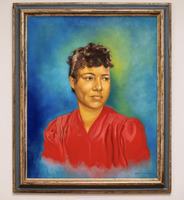
Achievements in science, medicine, and dentistry blossomed within the membership. Dr. David Turpin developed a significant legacy as a dentist. Dr. Ruth Easterling blazed a trail as a physician. A graduate of Tufts University School of Medicine, Dr. Ruth Marguerite Easterling (1898-1943) was one of Tufts first Black female students. In her short life she made a national impact as a pathologist working with Dr. William Hinton in developing the Hinton test and with Dr. John B. West developing advances in treating tuberculosis. Dr. Easterling’s personal philosophy echoed the ethos of the A.M.E. Zion Church. She was “a strong supporter for equal rights for women and for all people.“ She wrote, “Equal rights means the right to be a full human being.”
Gustave Solomons (1905-1987), an electrical engineer, and Olivia Solomons (1909-1990), a teacher, were members of Rush who let their lights shine brightly in the civic life of the Cambridge community. A 1928 graduate of M.I.T., Mr. Solomons was the second Black person to sit on the Cambridge School Committee. Elected in 1959, he served five consecutive terms. His service was significant both in boosting the science and technology education available in the public schools and in keeping Cambridge free of the de facto segregation that characterized northern urban school systems.
The A.M.E. Zion Church was one of the earliest African American denominations to ordain women. Rush A.M.E.Z. has shone brightly in this tradition. In addition to its current pastor, Rev. Dr. Deborah Dancy, former pastor Rev. Margaret R. E. Lawson also served as a Presiding Elder. Voices for truth and liberation throughout its history and in the community continue to shape a movement built on faith. The history of Rush Memorial A.M.E. Zion Church as “the Freedom Church” in Cambridge, Massachusetts, is woven throughout the connections among Cambridge’s Black churches as they built a foundation for the care of souls and for the liberation of communities for all.
Sources:
- https://www.christianity.com/church/church-history/timeline/1701-1800/john-wesleys-heart-strangely-warmed-11630227.html
- https://crossstreetchurch.site.wesleyan.edu/the-origin-of-the-a-m-e-zion-church/
- https://amez.org/our-church/
- https://en.wikisource.org/wiki/A_Short_Account_of_the_Rise_and_Progress_of_the_African_Methodist_Episcopal_Church_in_America
- https://docsouth.unc.edu/church/rush/bio.html
- https://docsouth.unc.edu/church/rush/rush.html
- https://omeka.hrvh.org/exhibits/show/ame-zion-church-in-new-paltz/history-of-the-a-m-e--zion-chu
- https://now.tufts.edu/2024/02/23/equal-rights-legacy-continues-support-medical-students
- https://www.cambridgehistorymuseum.com/black-history-stroll-2023-2
- https://www.blackhistory.mit.edu/archive/gustave-m-solomons-1928
Some images from Rush Memorial A.M.E. Zion Church: