St. Augustine’s African American Orthodox Christian Church
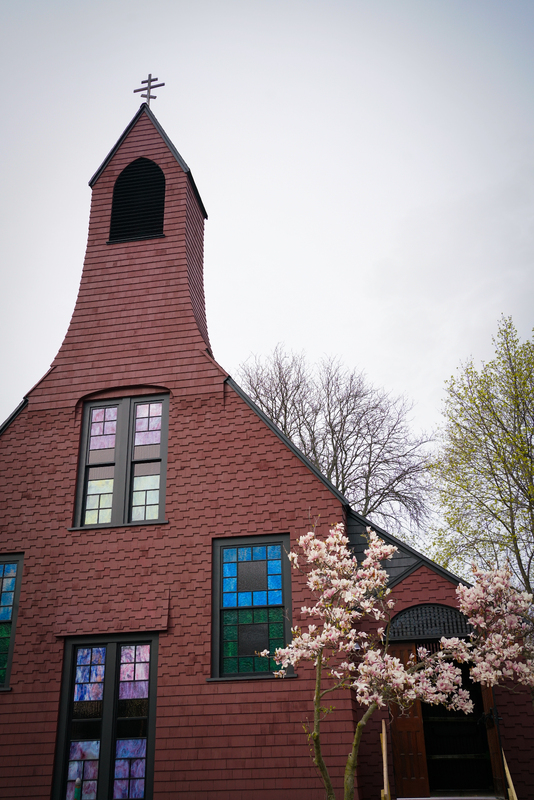
137 Allston St, Cambridge, MA 02139
The African Orthodox Church (AOC) was born of the encounter between two West Indian immigrants and committed Pan-Africanists in the United States: The firebrand organizer and activist Marcus Garvey from Jamaica and the Episcopalian minister George Alexander McGuire from Antigua. Both born in the Caribbean and part of the lively circuit of early 20th century transnational migration that produced the West Indian diaspora in the US, these men sought Pan-African unity, Black self-organization, and institution-building as the means for collective liberation.
Frustrated by the racism of his Episcopalian (Anglican) church, McGuire sought an alternative, settling eventually on Orthodox Christianity, which he believed had no connection to Atlantic slavery or racism. Like so many others, his frustrations also brought him to the Universal Negro Improvement Association (UNIA), the premier Pan-African organization in the world in the early 20th century, which Marcus Garvey had founded with his wife Amy Ashwood in 1914. While working within the UNIA, McGuire produced the foundational documents for what would become the AOC, and in 1921 he formally established the church. In 1928, the AOC acquired the building at 137 Allston Street in Cambridge, MA, and this new church, St. Augustine’s, became the AOC’s pro-cathedral. The church largely served Greater Boston’s West Indian migrants, specifically the Bajan community.
There are many types of stories to tell about the world of St. Augustine’s. We might think of the church as sitting in the middle of a Venn diagram whose many overlapping ‘circles’ represent different aspects of the church’s community, and thus different genres of story. The geographical circle encompasses the different places related to the community—the neighborhoods of Cambridgeport, Roxbury, and Dorchester, where its parishioners lived, and the Caribbean nation of Barbados from which so many of them hailed; the generational circle encompasses the multigenerational nature of the church community, with the church woven into its members lives from baptism to funeral services; the social circle encompasses those non-religious ways of being together and being part of the wider community that the church made possible; and finally, the spiritual circle encompasses the specific AOC religious practices and styles of worship and ritual that ground St. Augustine’s as a house of worship.
The building that would become St. Augustine’s was de signed by noted architect Robert Slack and built in 1886 as St. Philip’s Church, a mission of St. Peter’s Episcopal Church. It was acquired by the African Orthodox Church in 1928, and has been called St. Augustine’s ever since.
Follow the underlined links below to view oral histories with community members of St. Augustine's.
Oral history with Stephen Mascoll, in conversation with Deena Bhanarai and Dr. Kris Manjapra
Oral History with Ms. Yvonne Gittens, in conversation with Dr. Kris Manjapra
Sources:
- Courtesy St. Augustine’s African American Orthodox Christian Church, 2025.
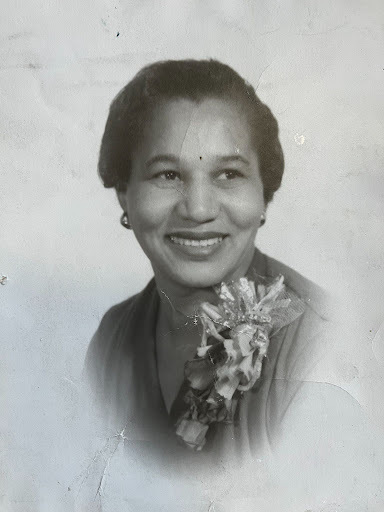
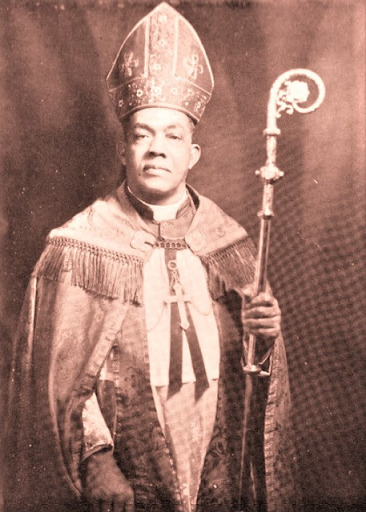
Some images from St. Augustine’s African American Orthodox Christian Church: