St. Paul African Methodist Episcopal Church
37 Bishop Richard Allen Drive, Cambridge, MA 02139
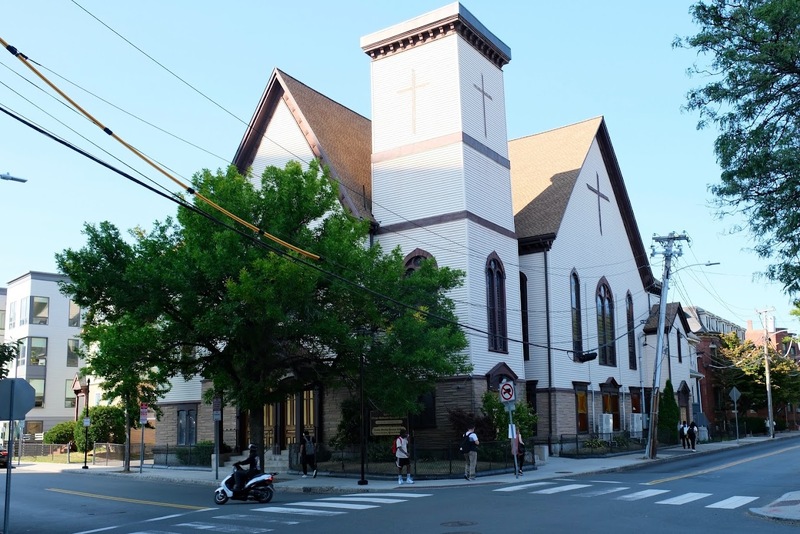
St. Paul African Methodist Episcopal Church: A Historical Reflection
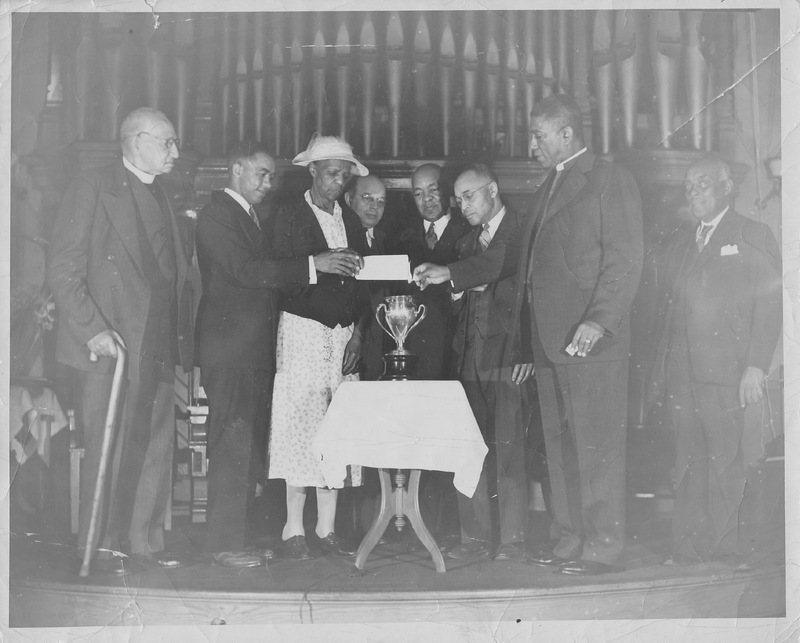
In 1870, after the Civil War had already ended, Cambridge had an influx of people from the South, Nova Scotia, and Canada. With no Black churches in Cambridge, Brother Henry Buckner, a resident of Cambridge, opened up his Hastings Street home for prayer meetings. Soon, the crowds were far beyond the capacity of Brother Buckner’s home. They undertook a walk of faith and purchased land at the corner of Hastings and Portland Streets and built a house of worship. Thus, the first Black church became a reality in the city of Cambridge, MA.
In 1873, the congregation received admission into the African Methodist Episcopal Church. Rev. Dallas Turner, a theological student, was assigned to temporarily fill the pulpit. Upon ordination, Henry Buckner, became the second Pastor and set in place the A.M.E. organizational structure of Stewards, Trustees, Stewardess and Sunday School Superintendent.
St. Paul focused attention on the social and economic needs of the membership and the surrounding community. Much of this work became the responsibility of the Missionary Society organized in 1877 and named in honor of Sister Margaret Hazel.
The World War I period was a time of growth and change for St. Paul. World events and economic considerations coupled with increased immigration and migration brought a significant increase in new parishioners from the South and Caribbean.
In 1920, the Wood Memorial Church, with a 500+ seat capacity, was purchased. A triumphant march was made through the streets of Cambridge to the corner of Columbia and Austin St- the present site of St. Paul African Methodist Episcopal Church.
With a vision for the future, leaders of St. Paul, in the late 1920’s purchased the old Tarbell School from the City of Cambridge and founded the Cambridge Community Center. When the greatest economic depression in the history of our country hit in 1929, strong business acumen and skilled leadership helped stay the hand of disaster, and the church moved on with a renewed hope, a tested faith, and an even more determined spirit.
During World War II era, in 1942, the Layman’s Organization was formed to encourage members to meet their financial obligations. Other organizations also contributed to the strength of the St. Paul family during this period: the Allen Guild, young Missionary workers, the Young Adult Christian Endeavor League, the Young Women’s Auxiliary, along with the Senior Chancel Choir, Junior Ushers, Boy and Girl Scout Troops.
By the 1960s, the role of young people became increasingly more important in the growth of the church and in 1963, the Little People’s Choir (now the Angels Without Wings) started and in 1966 the Inspirational Choir was founded.
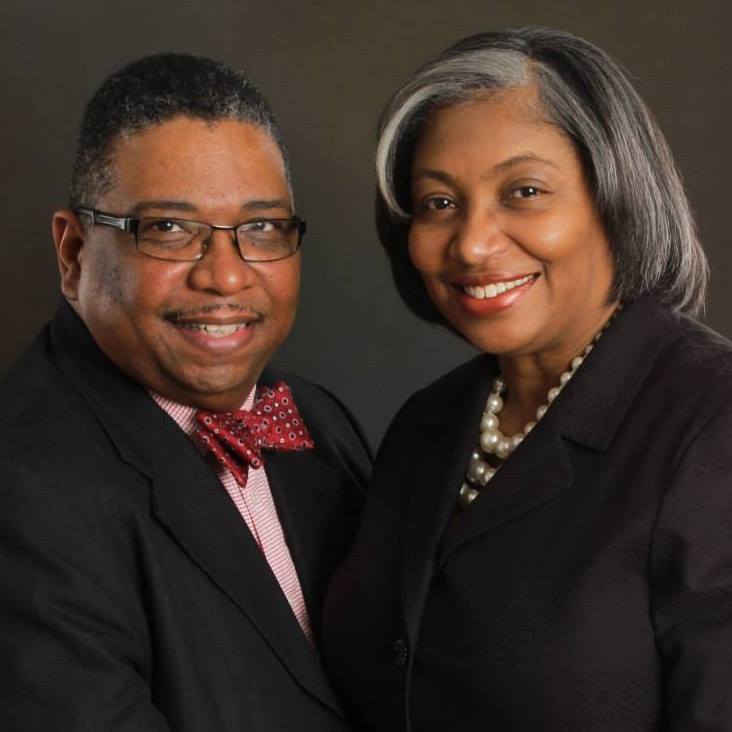
In 1970, Rev. John R. Bryant (now Bishop Bryant) was appointed to St. Paul. He and Sister Bryant (now Rev. Bryant), a dynamic leadership team, brought a youthful vitality and spiritual fervor that helped to revive, rejuvenate and grow the church and ministry of St. Paul.
The St. Paul men formed “The Brotherhood,” a fellowship group and the Men’s Chorus. The New Temple Singers was transformed from the Temple Singers in 1972. Several other programs were incorporated into the life of St. Paul including the Social Action Committee, Black Empowerment, Community Church School, Bible Study Hour, the Teen Drop-in Center, the Educational Counseling Center, and the Youth and Adult Theatrical Arts Groups. During Rev. Bryant’s tenure, the Rosa Parks Inner City and the Artisha Jordan Pan African Missionary Circles were formed.
The Henry Buckner School first opened in September 1974 with the purpose of providing young children with positive and challenging education experiences through positive images and role models.
In October 1974, Austin Street was renamed ‘Bishop Richard Allen Drive’ to honor the founder of African Methodism, Bishop Richard Allen. This was the first time in the history of the African Methodist Episcopal Church that a public street was dedicated and renamed in honor of their founder.
In 1975, Kresge Auditorium at the Massachusetts Institute of Technology was secured to accommodate the increasing Easter Sunday congregation. Every Easter since then, the St. Paul family has marched victoriously to Kresge Auditorium for Sunday Resurrection Worship.
Rev. Dr. John E. Brandon was appointed to St. Paul in 1975 and served until 1977. In 1977, under his leadership, the African Cultural Society was founded, the Henry Buckner School expanded to include grades two and three and the church purchased the property at 87 Pine Street.
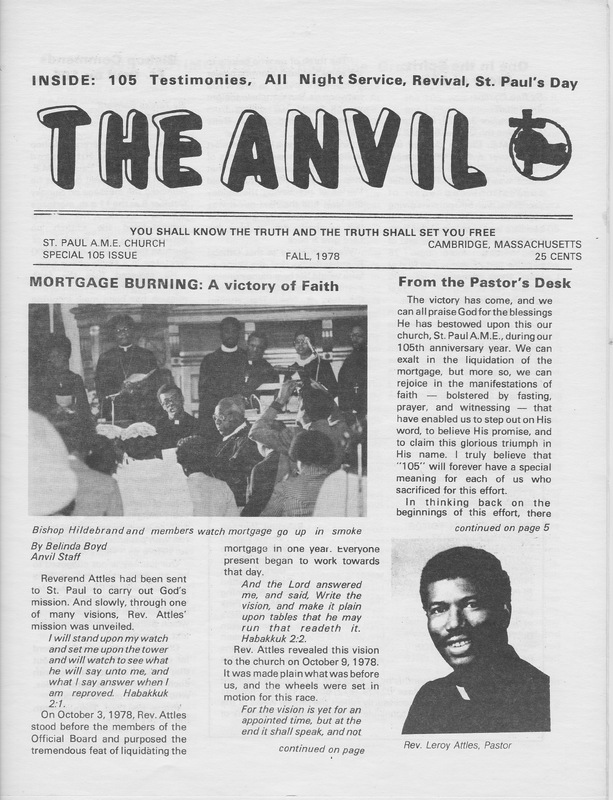
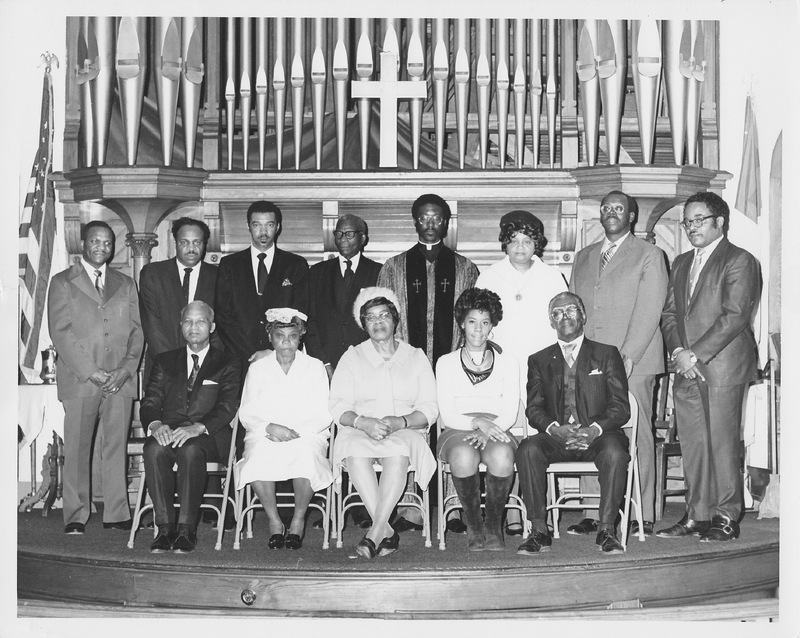
During the tenure of the longest serving Pastor of St. Paul, the Rev. Dr. LeRoy Attles, Sr., (1977 - 2009) the church experienced many new and expansive ministries and great accomplishments. In 1977, the ‘105 Steps of Faith’ plan to liquidate the $56,000 mortgage was introduced. And The Hildebrand Outreach Center was developed out of a vision to respond to the needs of homeless families in the Cambridge community.
In 1988, St. Paul purchased and renovated a building for The Christian Life Center, a multicultural and non-denominational center that provided services for the spiritual, physical and mental well-being of the greater Cambridge community.
In the years 1994, 1995 and 2002 members and organizations launched fundraising campaigns to purchase stained glasses windows for the sanctuary and eliminate mortgage debt on the Christian Life Center thereby positioning the ministry to grow.
Rev. Marcellus A. Norris was assigned to St. Paul in 2009 and served until early January 2012. During that time, he expanded the Young Adult Network to include the YAN Choir. He also successfully engaged the broader Cambridge community in the 250th Anniversary Celebration of Richard Allen, the founder of the African Methodist Episcopal Church.
In early 2012, Rev. Wilson entered his pastoral ministry assignment at St. Paul AME Church, in an environment of change and uncertainty. Rev. Wilson embarked on a ministry committed to ‘Growing Through Knowing’. Until his departure in 2013, Rev. Wilson instituted numerous learning opportunities for the spiritual growth and development of the congregation.
Since 2013, the current pastor, Rev. Dr. Ellis. I. Washington has skillfully led the congregation with commitment and compassion through the challenges of a Covid pandemic, the use of Zoom technology, the leasing of the Christian Life Center for financial stability, the establishment of the Eleanor Yard Food pantry for those families in need and joined with other faith-based organizations to actively address homelessness. As a preacher and educator, he inspires the congregation to deepen the congregation’s faith, worship and service in the name of God.
For more than 150 blessed years, St. Paul A. M. E. Church has experienced a myriad of spiritual and physical challenges and growth. The congregation has evolved from the humble beginnings of skilled laborers and service workers to include educators, an array of professionals, artists, physicians, clergy and many more.
Today, the congregation still remains the faith home to Black families, some who trace their membership back generations, a welcome place for diverse new individuals and families from across Cambridge and beyond and an integral part of the Cambridge community as it moves into the future.
Over the years, St. Paul has been visited by and has counted among its members many notable local and national personalities, elected officials, A.M.E. Bishops, leaders, and dignitaries. This list includes civil rights activist Rosa Parks (guest speaker 1983), members Dr. Ronald E. McNair (the nation’s second Black astronaut), The Honorable Kenneth E. Reeves (the first African American Mayor of the City of Cambridge) the internationally renowned civil rights advocate and champion for justice, Charles J. Ogletree, and Cambridge’s current esteemed Mayor E. Denise Simmons.
This has long been celebrated as an anthem of freedom for Black people in this country and is traditionally sung during Black History Month. The video highlights a section of Pastor Washington’s Sermon entitled “Glory” based on a passage from 2nd Corinthians and inspired by the heroism and sacrifices of Massachusetts’ all Black 54th Regimen during the Civil War (as depicted in award winning movie Glory in 1989).
View the album covers for the music above by clicking the "browse images" button below.
Sources:
- Courtesy St. Paul African Methodist Episcopal Church, 2025.
Some images from St. Paul African Methodist Episcopal Church: