Union Baptist Church
874 Main St, Cambridge, MA 02139
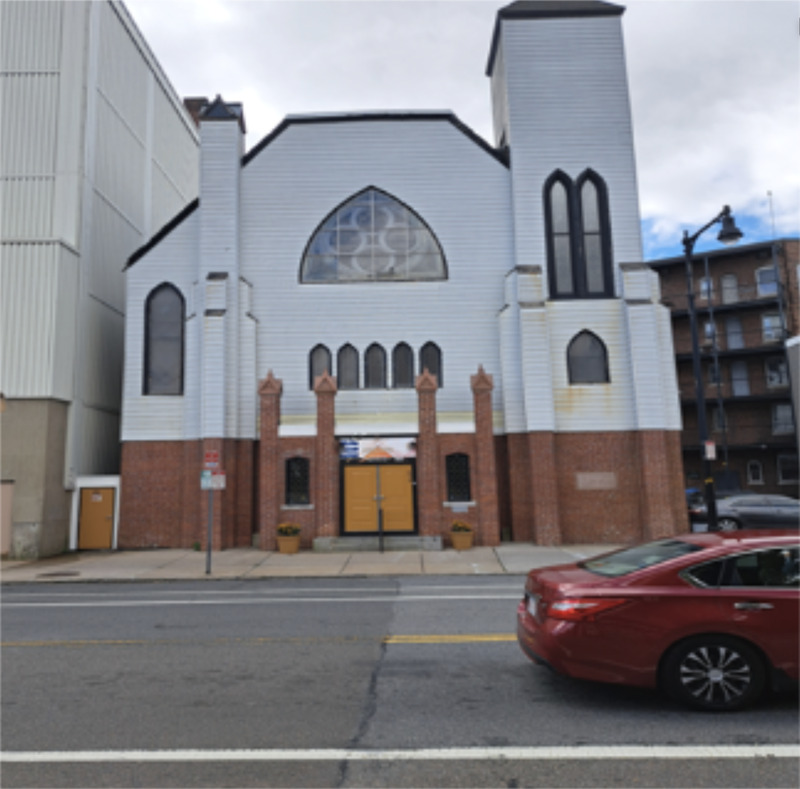
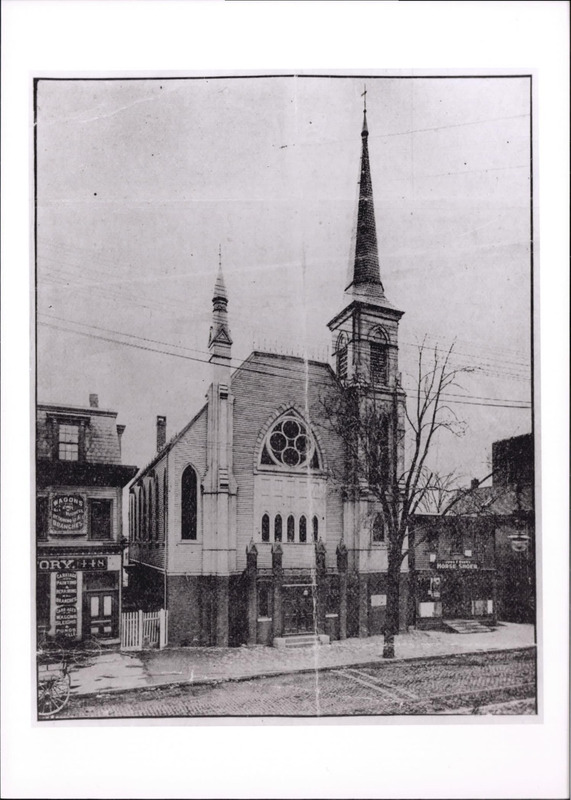
Intersections define the 146-year history of Union Baptist Church. The Church, founded in 1878, began as many African American churches begin—in a prayer meeting on October 27, 1878 in Central Square. In 1883, the membership laid the cornerstone for the building located at 874 Main Street near Lafayette Square where Massachusetts Avenue and Columbia Street intersect. That historic edifice is still its home.
The church’s founders represented important intersections of African American history. Some of the founders were part of the free Black communities in Cambridge and Boston established before the Civil War. Others were from Henderson, North Carolina, in Vance County. Some were part of the Black migration out of Nova Scotia, descended from settlements formed by the British after the Revolutionary War and the War of 1812. Other Black Nova Scotians were descended from refugees dislocated by the Fugitive Slave Law of 1850.
The intersection between Cambridge, Massachusetts, and Vance County, North Carolina, is particularly significant. A small early migration came out of the South at the end of Reconstruction. People came seeking education and educational opportunities for their children. With roots in the African Meeting House, Cantabrigian Baptists from Boston’s Twelfth Baptist Church, provided the intersection between Cambridge and Boston as they sought better education for their children. Access to classical education in Cambridge in the shadow of Harvard also drew people to Cambridge and nurtured the growth of the Church community.
The Vance County intersection fostered a special legacy at Union Baptist Church. Charlotte Hawkins Brown (1883-1961) was an educator whose family left Henderson, North Carolina, for education and greater opportunities. The Hawkins family, along with others from Henderson, among them the Crutchfields and the Willises, settled in Cambridge and became active members of the newly built church. Discovered and supported by Alice Freeman Palmer, Charlotte Hawkins Brown returned to North Carolina where she founded the Palmer Memorial Institute, where she provided an education preparing her students “to live in the whole world.” Dr. Brown donated one of the majestic stained-glass windows in the church in honor of her mother.
Along with its neighbors, St. Paul A.M.E. and Rush Memorial A.M.E. Zion, Union Baptist Church provided the oldest foundations for the historically Black church community in Cambridge. In 1903 W.E. B. Du Bois declared, “The Negro church of to-day is the social centre of Negro life.” The churches were a source of cultural capital for the entire community especially by way of their music ministries. Organists and choir directors not only provided the music on Sunday mornings, but they also provided music education for the children of their churches.
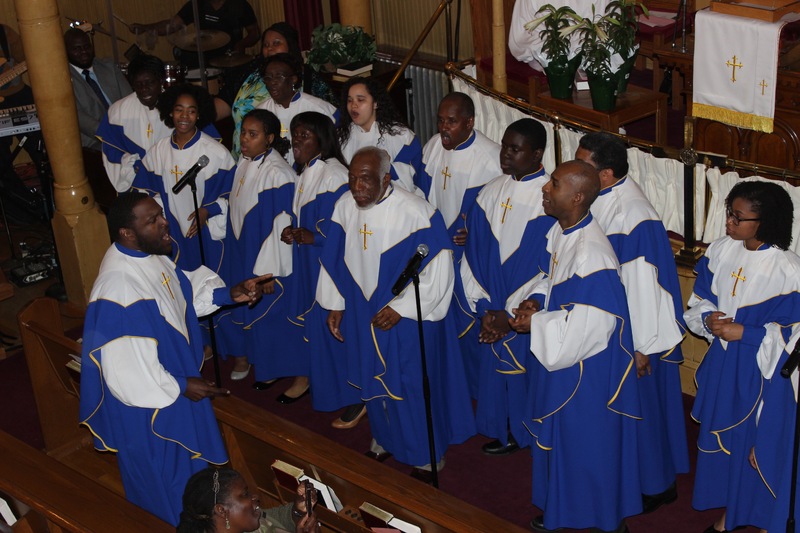
The classically trained daughters of the Harrell and Kiner families served as organists and directors of the Senior Choir. In addition to the Senior Choir (later re-named the Chancel Choir), Union Baptist Church had a Gospel Chorus that sang to piano accompaniment. That choir emerged out of the Gospel chorus and choir movement begun in 1932 by Thomas A. Dorsey. Evangelist and soloist, Mother Willie Mae Ford Smith (1904-1994) conducted a revival at Union during the early 1950s and Union Baptist served as an important magnet for gospel choir festivals and concerts on Sunday afternoons. Originally from Memphis, Tennessee, Mrs. Kitty Rippy was such a significant Gospel Chorus soloist that she recorded a record album.
Mrs. Alfreda Kiner Freeland organized a Junior Choir in the early 1950s. Using her classical training and her love for every type of music, she taught her young charges anthems, spirituals, hymns, gospel music, and inspirational songs such as “You’ll Never Walk Alone” and “Trees,” a song set to the poem by Joyce Kilmer. Nearly every Sunday afternoon they visited other churches in the Cambridge-Boston area if they were not singing at a “programme” at Union Baptist.
The Great Migration of the 20th century fed Union’s membership. The early migration of Barbadians and Jamaicans intersected with this historic moment and the church communities grew by marriage and extended family. As the Cambridge and Boston Black communities grew, enterprising pastors organized their congregations accordingly. Union Baptist Church developed the North Cambridge Club, the Roxbury Club, the Boston Unit, and the Central Cambridge Club. Not only did these organizations raise money for the church but they also organized Sunday afternoon programs. Along with soloists and musicians, these groups also invited speakers who educated and empowered the community. Cambridge Black teachers were particularly popular speakers.
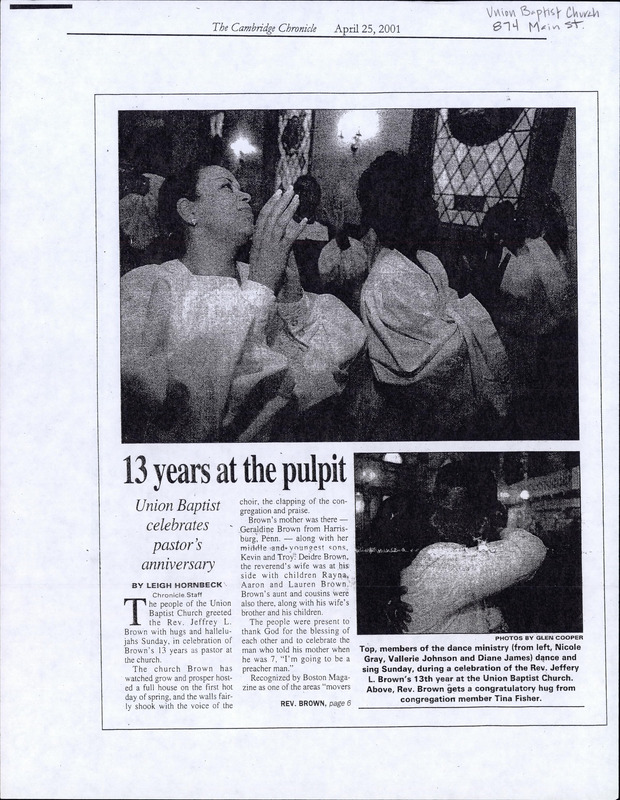
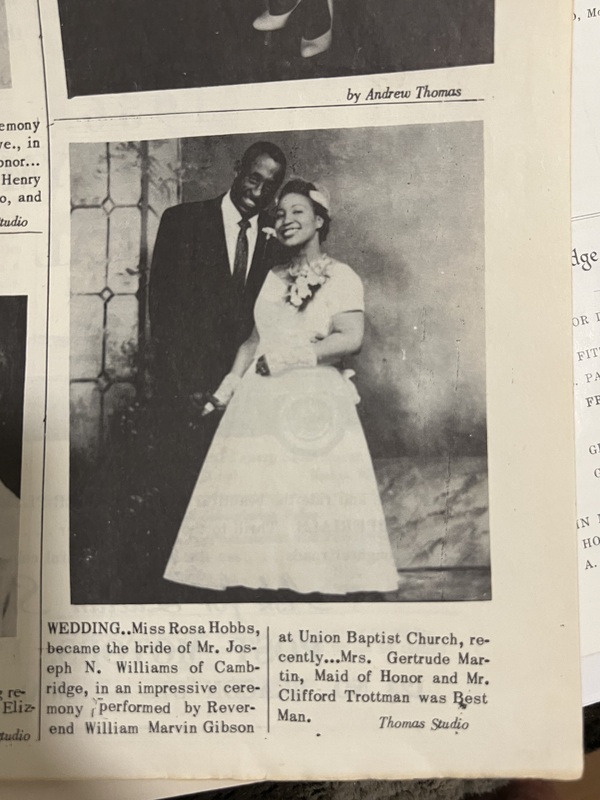
In Black churches, preaching is central. Because of the educational intersection, Union provided preaching opportunities for seminarians from Boston University School of Theology, Harvard Divinity School, and Andover Newton Theological School. One pastor, Rev. Marvin Gibson invited doctoral student, Rev. Martin Luther King to preach in April of 1955. Rev. King subsequently provided supply preaching and administered the church’s ordinances during Rev. Gibson’s illness. There are copies of baptismal certificates signed by Rev. King in his papers. Twice a Harvard graduate (M. Div. and Ph.D.), Rev. Herbert O. Edwards was a pioneer in using the Church’s annual Women’s Day to invite ordained and licensed women to preach from the pulpit. Rev. Dr. Olivia Pearl Stokes (1916-2002) was one of these notable pioneers, an ordained Baptist minister and the first Black woman recipient of a doctorate in Christian Education (1952); she served as the Director of Christian Education for the Massachusetts Council of Churches for 14 years. In addition to Rev. Edwards, the educational intersection provided important pastors, most notably, Rev. Melvin Brown and Rev. Jeffrey Brown. Support for women seminarians and the ordination of women grew in significance.
The educational intersections fostered civic intersections. Pastors and members of the church contributed to the creation of community outreach programs that uplifted communities in Cambridge and also in Boston. Such work was especially important for addressing gang violence and the resettlement of people from New Orleans in the wake of Hurricane Katrina. Sitting at important geographic, cultural, educational, and spiritual intersections, Union Baptist Church sees its mission to be “a Lighthouse” in the community. Shining that light provides important opportunities for connection, commitment, and community at the intersections.
Click on this link to listen to Kitty Rippy of Union Baptist Church Gospel Choir. Scroll to the bottom of the page. Courtesy of the Union Baptist Church.
Sources:
- Courtesy Union Baptist Church, 2025.
- Olivia_Stokes, Schlesinger Library on the History of Women in America, https://www.flickr.com/photos/schlesinger_library/13270560514.
- Charlotte Hawkins Brown, The Cambridge Black History Project, https://cambridgeblackhistoryproject.org/project/charlotte-hawkins-brown/
- The National Convention of Gospel Choirs and Choruses, https://www.ncgcc.org.
Some images from Union Baptist Church: